Northern Lights: Discover the Magic of Aurora Borealis
Explore the breathtaking Northern Lights, discover how auroras form, where to see them, and the best time to witness nature’s spectacle.
Latest Articles on Northern Lights Glow
What is Northern Light?
Northern Lights, or Aurora Borealis, are colorful natural light displays in the night sky caused by charged particles interacting with Earth’s atmosphere. Is this conversation helpful so far?
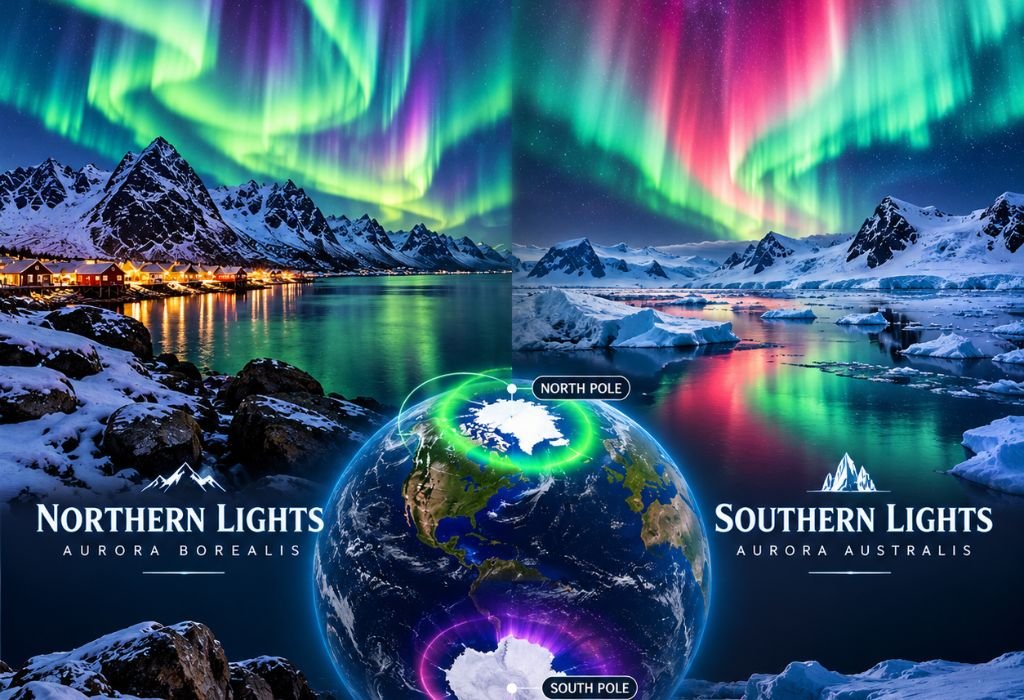
Northern & Southern Aurora Borealis
Northern Lights (Aurora Borealis) and Southern Lights (Aurora Australis) are stunning natural light displays near Earth’s poles, created when charged solar particles interact with atmospheric gases, producing beautiful, colorful glowing skies.
How Are the Northern Lights Formed? Science Behind the Aurora Borealis
The Northern Lights happen when the Sun emits charged particles that fly toward Earth and interact with its magnetic field. When these particles collide with gases such as oxygen and nitrogen present in the atmosphere, energy gets released as colorful lights. A natural phenomenon of captivating green, pink, purple, and red displays blanketing the polar skies.
How Do the Northern Lights Occur? The Science Behind Aurora Borealis
Charged particles from the Sun interact with Earth’s magnetic field, producing what are collectively called the Northern Lights or Aurora Borealis. These particles then move towards the polar areas and hit atmospheric gases of oxygen and nitrogen. Those collisions are what airborne energy produces our beloved green, purple, pink and red lights that we can see lighting up the night sky. The northern lights This stunning natural spectacle is typically seen near the Earths magnetic poles during winter months of clear, dark nights, especially in polar areas.
Where to See Northern Lights (2026-2027)
- Tromsø, Norway: Famous for spectacular aurora displays and Arctic adventures.
- Abisko, Sweden: Known for clear skies and excellent viewing conditions.
- Rovaniemi, Finland: Offers magical aurora experiences and glass igloos.
- Reykjavík, Iceland: Ideal for exploring nearby dark-sky locations.
- Fairbanks, Alaska: Popular for frequent Northern Lights sightings.
- Yellowknife, Canada: Offers excellent aurora viewing opportunities.
- Kiruna, Sweden: Features beautiful Arctic landscapes and colorful skies.
- Alta, Norway: Renowned for its Northern Lights experiences.
- Whitehorse, Canada: Perfect for peaceful wilderness aurora viewing.
- Saariselkä, Finland: Known for snowy scenery and aurora accommodations.
Essential Tips Before Visiting the Best Northern Lights Destinations
- Choose the Right Season: Visit between September and March for darker skies.
- Check Aurora Forecasts: Monitor solar activity and weather conditions regularly.
- Avoid City Lights: Travel to remote locations for better visibility.
- Dress Warmly: Wear insulated clothing to stay comfortable in freezing temperatures.
- Be Patient: Aurora sightings depend on natural conditions.
- Bring a Camera: Capture stunning moments with the right night-photography settings.
When Northern Lights Can Be Seen?
The Northern Lights are best seen between September and March, when nights are longer and skies are darker in Arctic regions. The ideal viewing hours are usually between 10 PM and 2 AM, although auroras can appear anytime after dark. September and March often provide excellent opportunities due to increased geomagnetic activity. For the best experience, choose clear, cloudless nights, avoid city lights, and check aurora forecasts before planning your trip.
- Best Season: September to March offers longer, darker nights, making auroras easier to spot.
- Ideal Viewing Hours: Between 10 PM and 2 AM is often a good time to watch for aurora activity.
- Weather Conditions: Clear, cloudless skies are essential for enjoying colorful Northern Lights displays.
- Best Locations: Visit Arctic destinations such as Norway, Iceland, Finland, Sweden, and Alaska for excellent viewing opportunities.
Best Time to Explore Norway and Witness the Northern Lights
Norway’s prime Northern Lights season is usually during long dark nights (the champagne of atmosphere for Night Watchers) from September to March. You can find it in places such as Tromsø, Alta, and the Lofoten Islands. Between 10 PM to 2 AM on clear nights and away from the cities increase your chance of the gorgeous natural phenomenon.
Frequently Asked Questions
1. What is the best month to see the Northern Lights in Norway?
September to March is the best viewing season, with February and March offering excellent opportunities for clear skies and aurora activity.
2. Where is the best place to see the Northern Lights in Norway?
Tromsø, Alta, Lofoten Islands, and Kirkenes are among the best destinations in Norway for experiencing the Northern Lights.
3. What time do the Northern Lights appear in Norway?
The Northern Lights can appear anytime after dark, but 10 PM to 2 AM is often a good viewing window.
4. Can you see the Northern Lights in Norway during summer?
Northern Lights are generally not visible during summer because the midnight sun and extended daylight prevent the sky from becoming dark enough.
5. How many days should I stay in Norway to see the Northern Lights?
Plan a 3–5 night trip to improve your chances of witnessing the Northern Lights, as visibility depends on weather conditions, solar activity, and clear skies.